Welcome to the Karkhana.io blog, your trusted source for cutting-edge manufacturing solutions. In this article, we will delve into the future of the collaborative robot market and explore the trends and predictions that are shaping the industry.
The Rise of Collaborative Robots
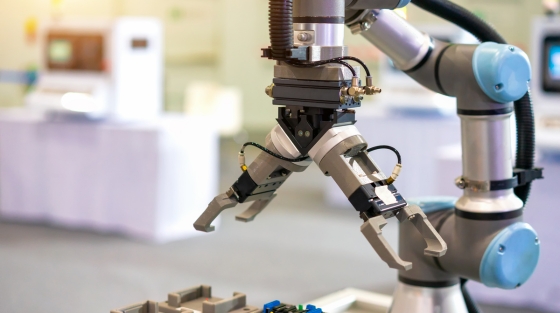
Collaborative robots, also known as cobots, have gained significant traction in recent years. Unlike traditional industrial robots that operate in isolation, cobots are designed to work alongside humans in a collaborative manner. They offer flexibility, ease of use, and enhanced safety features, making them ideal for various applications across industries.
Trends Shaping the Future of Collaborative Robots
1. Increased Adoption Across Industries
The collaborative robot market is witnessing widespread adoption across industries, including aerospace, automation, automotive, defense, energy, and more. As companies recognize the advantages of cobots, they are incorporating them into their manufacturing processes to improve efficiency, productivity, and safety. The demand for cobots is expected to grow significantly in the coming years.
2. Advancements in Artificial Intelligence and Machine Learning
Artificial intelligence (AI) and machine learning (ML) are driving the evolution of collaborative robots. With AI-powered algorithms, cobots can learn and adapt to new tasks, handle complex operations, and collaborate more effectively with human workers. This enables greater flexibility and efficiency in dynamic manufacturing environments.
3. Integration of Vision Systems and Sensors
Vision systems and sensors play a crucial role in enhancing the capabilities of collaborative robots. Advanced vision systems enable cobots to detect objects, navigate complex environments, and perform intricate tasks with precision. Integration of sensors allows cobots to perceive their surroundings and interact safely with human workers, further boosting their collaborative capabilities.
4. Improved Safety Features
Safety is paramount in human-robot collaboration. Manufacturers are continuously improving the safety features of cobots to ensure a secure working environment. This includes features such as force and torque sensing, collision detection, speed and proximity monitoring, and the development of safety standards specifically tailored for collaborative robots.
5. Expansion of Applications
The range of applications for collaborative robots is expanding rapidly. From assembly and pick-and-place tasks to quality inspection, packaging, and even intricate surgical procedures, cobots are increasingly being deployed in diverse industries and sectors. This versatility opens up new opportunities for businesses to automate repetitive and labor-intensive tasks, allowing human workers to focus on more complex and value-added activities.
Embracing the Future of Robotics with Karkhana.io
At Karkhana.io, we understand the transformative power of collaborative robots. With our extensive experience and expertise in CNC machining, injection molding, electronics integration, PCB’s & overall product assembly, we are well-positioned to provide tailored manufacturing solutions for collaborative robots.
Our detailed quality checklist & end-of-line testing ensures repetitive quality assurance of the robotic parts. Karkhana.io is a flexible & scalable manufacturing solutions provider that can cater to all your manufacturing needs.
Our flexible manufacturing services enable us to service client orders of all sizes from small batches to large volumes. We also help many of our clients in solving complex product assembly and localization problems.
We have an extensive, cutting-edge experience with all manufacturing services like CNC machining, 3d printing, Sheet metal fabrication, Injection moulding, and Vacuum casting.
We cater to every manufacturing need across industries like Aerospace, Automation, Automobile, Defence, Drone, Energy, EVs, FMCG, General Engineering, Medical, Oil & Gas, Pharma, and Robotics.
Partner with us to bring speed to your manufacturing. Talk to us about your manufacturing needs by filling up the form below or get in touch with Alay at alay@karkhana.io